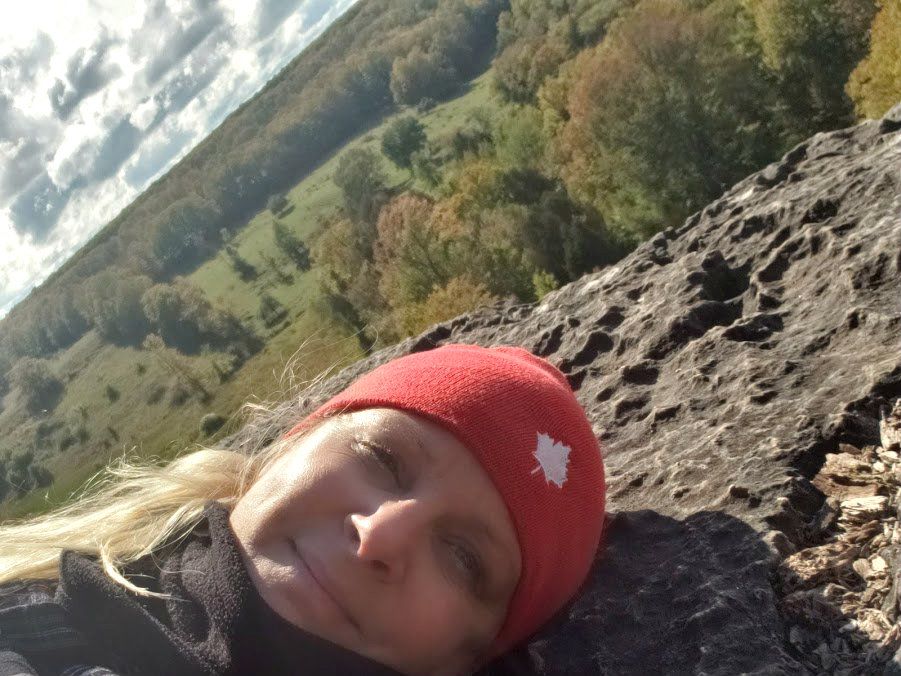
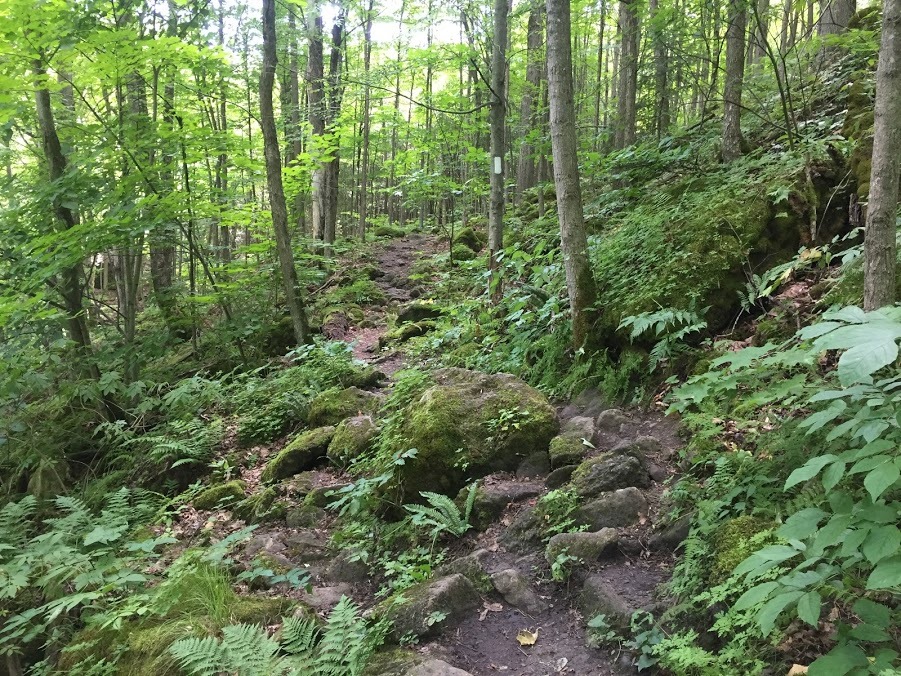
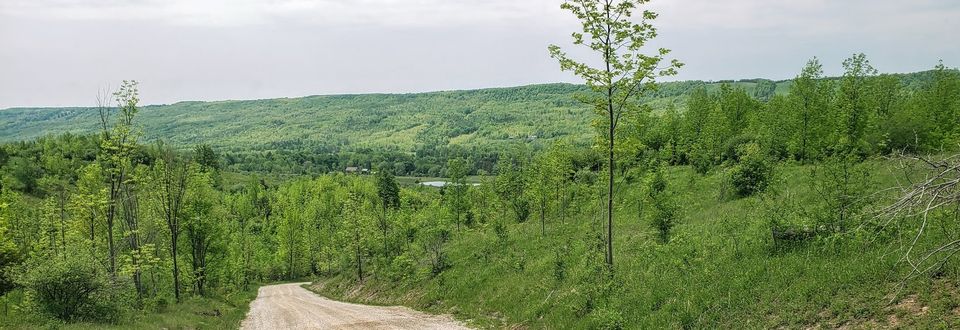
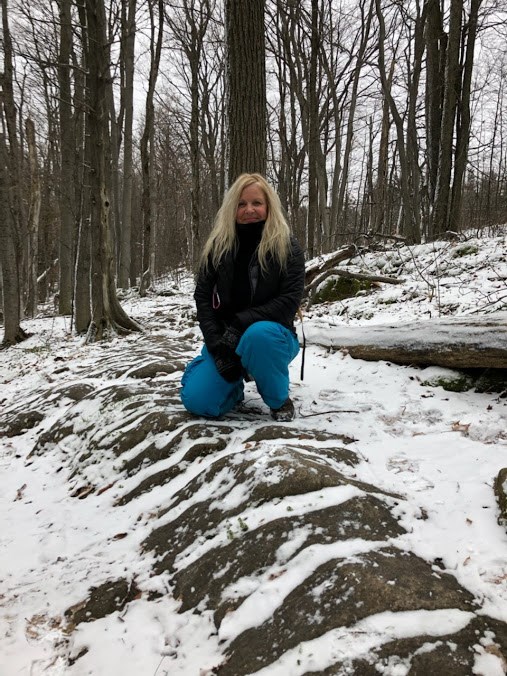
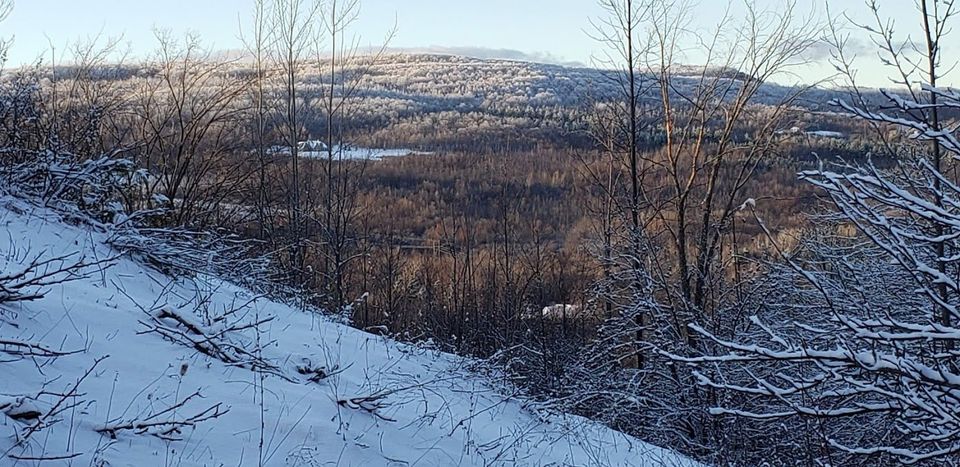
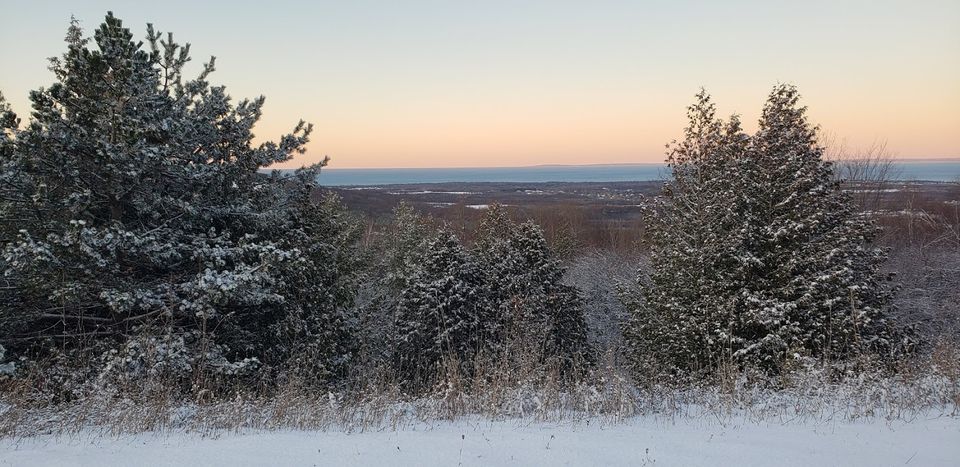
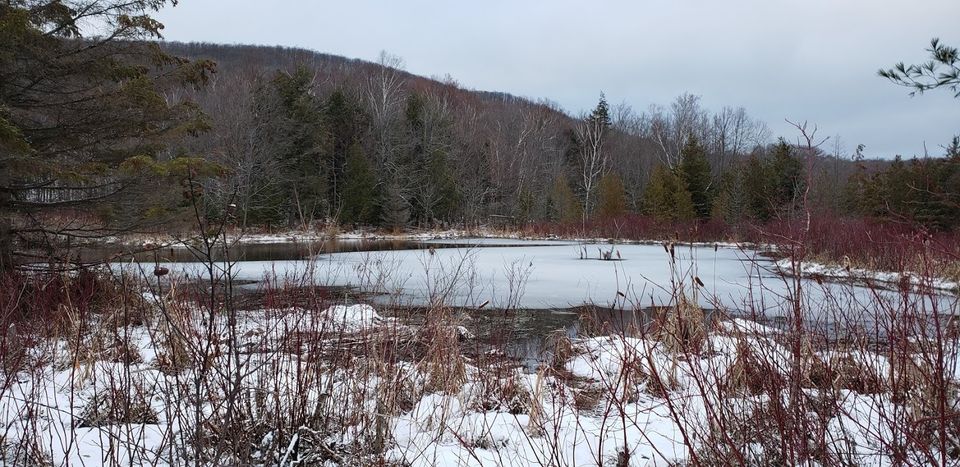
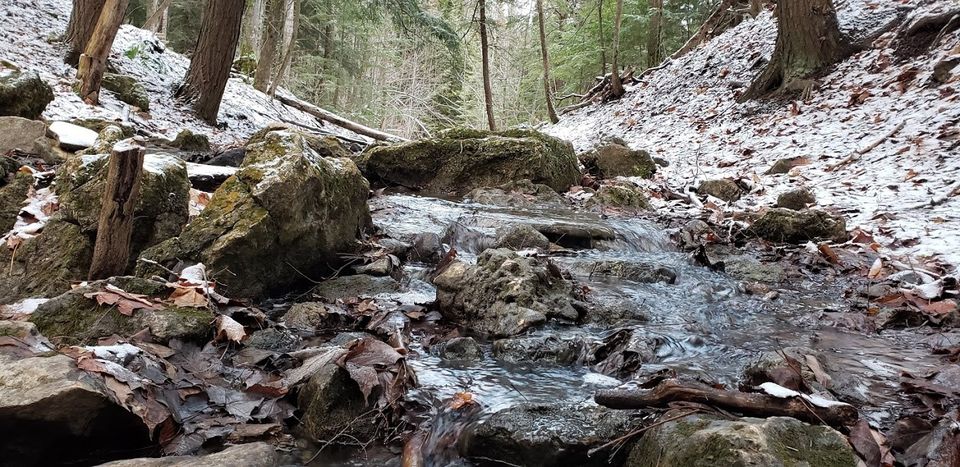
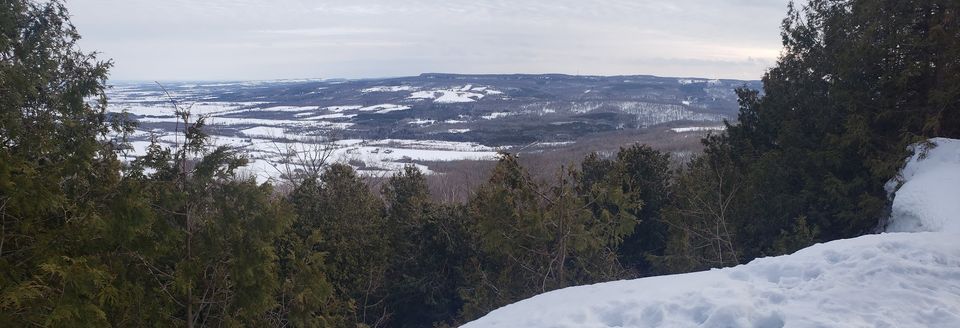
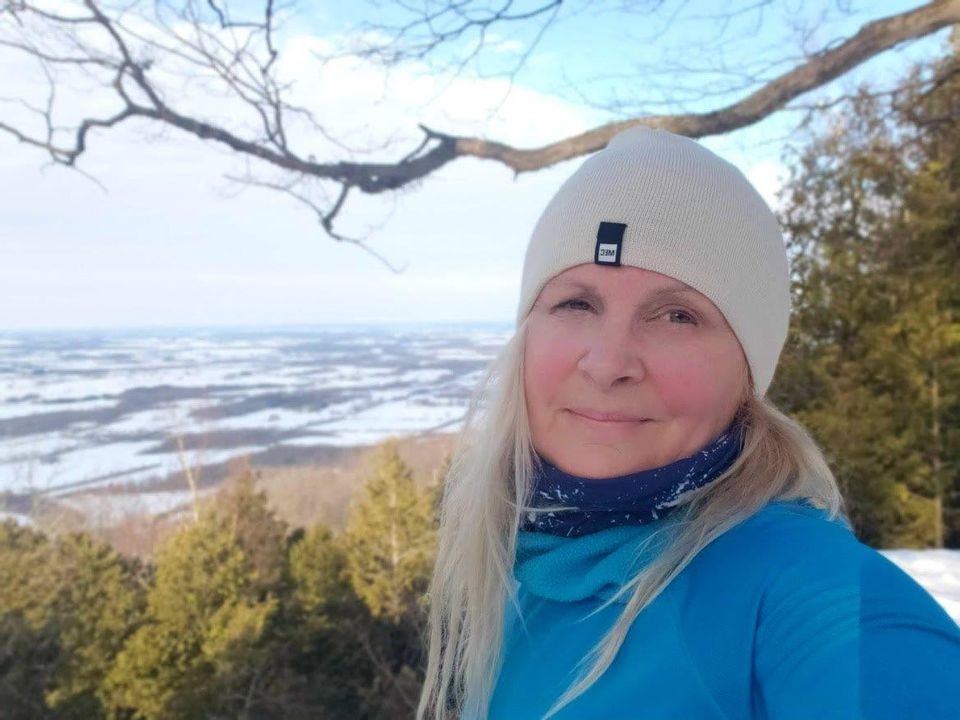
The bear and I walking the “Old Mail Road”

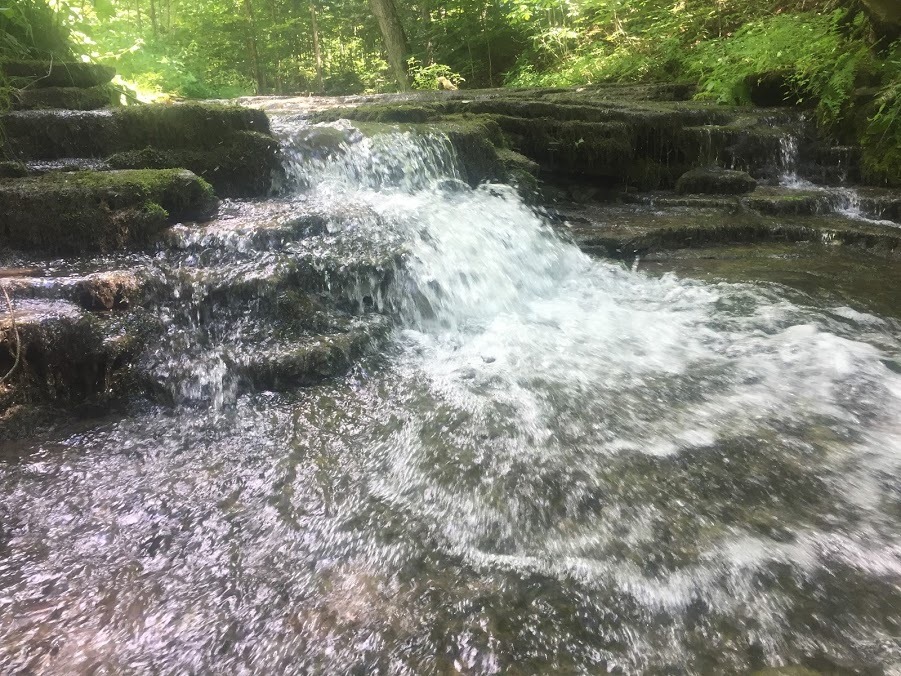
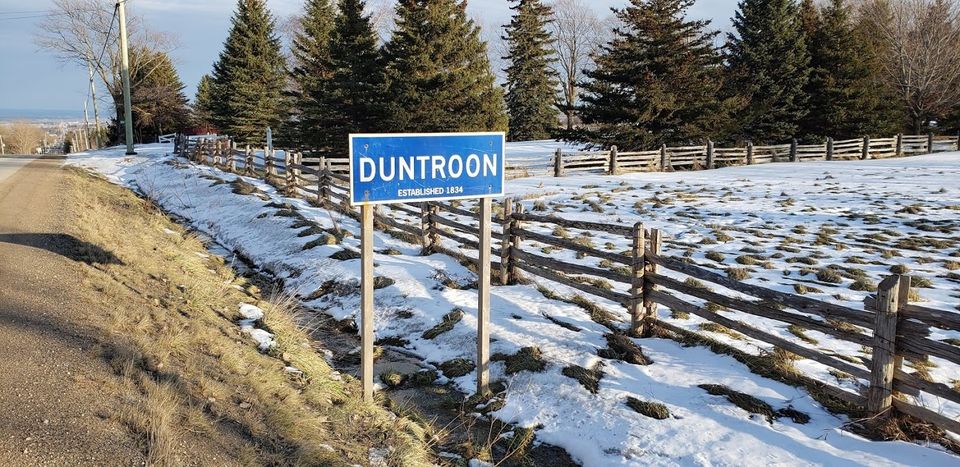
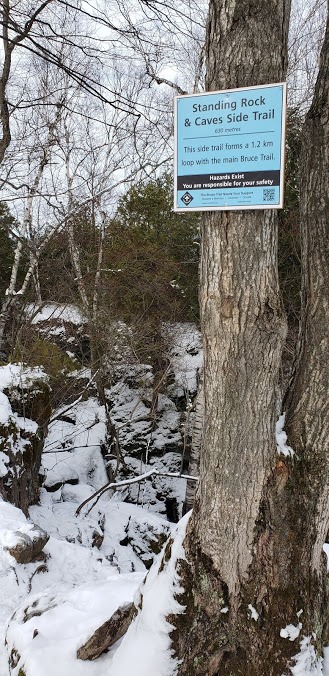
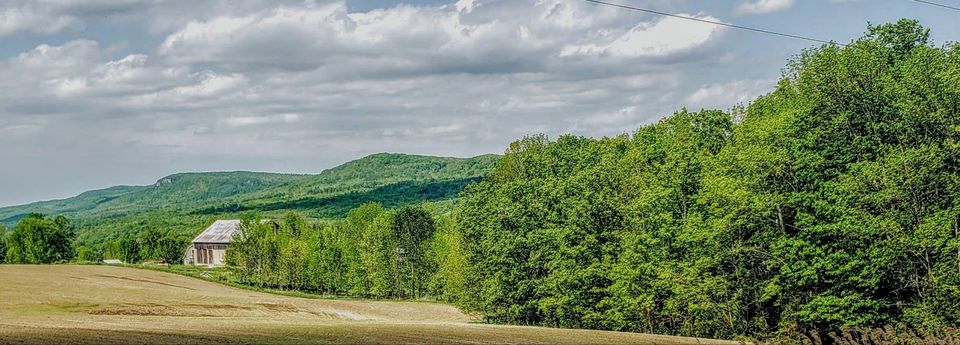
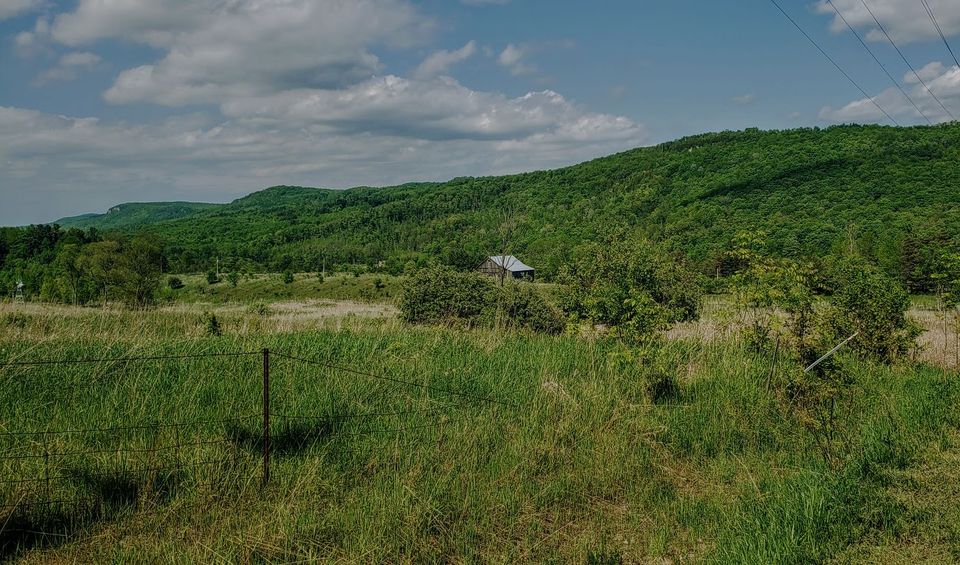
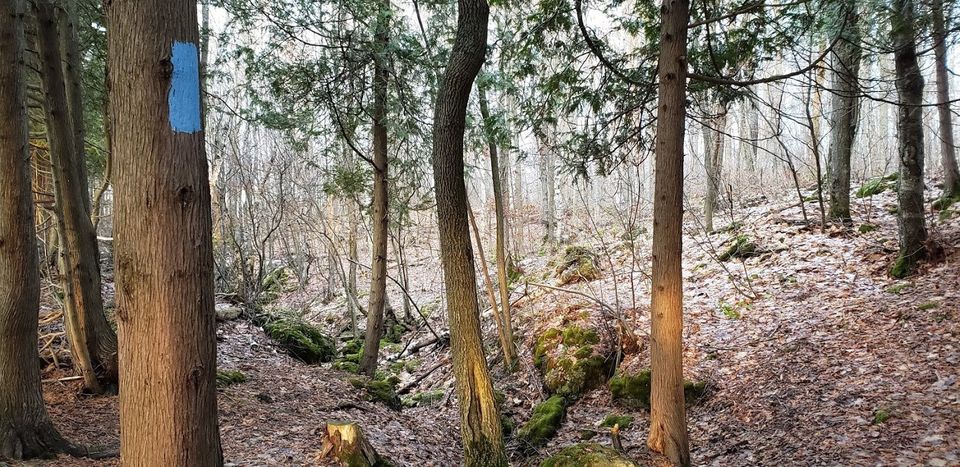
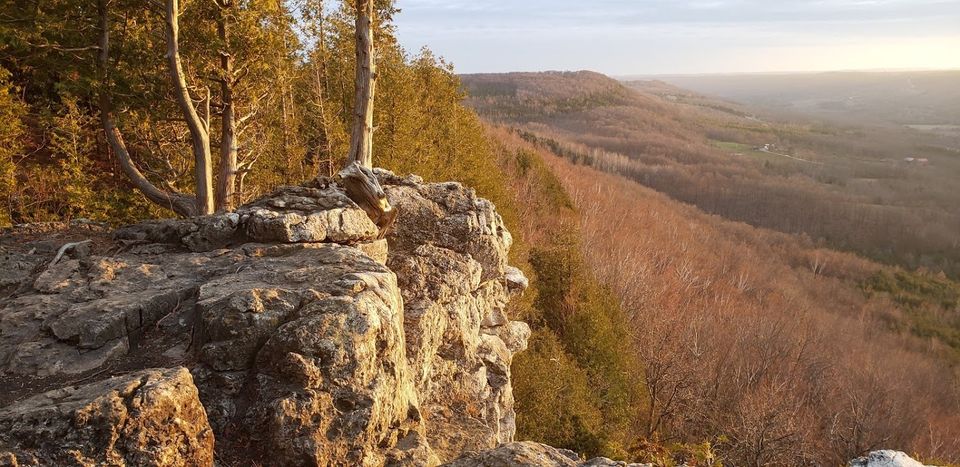
In the middle of a peaceful forest are the remains of an old pioneer road traveled regularly, despite its chronic state of disrepair, by settlers taking up land in the new townships. The Old Mail Road must have been, at least in part, an old Indian route, because ancient artifacts have been found along it. Running northwesterly from Duntroon, called the Sydenham Trail there, to Griersville, the Old Mail Road was in use possibly as early as 1835, although it was not established as a public highway until 1846. Only the eight-kilometre section between Heathcote and Griersville remains in use. I can only imagine that the pioneers also saw what I see today – fields of butterflies among colorful flowers and berries, shale creeks and crevices, spectacular views and yes, many fresh bear tracks moving along the same road just ahead of me. One of my favorites! Signing off, “Hiking with the Viking”. Map #25, Beaver Valley Bruce Trail Club,
The Petun, or Tionontati (“People Among the Hills/Mountains”)

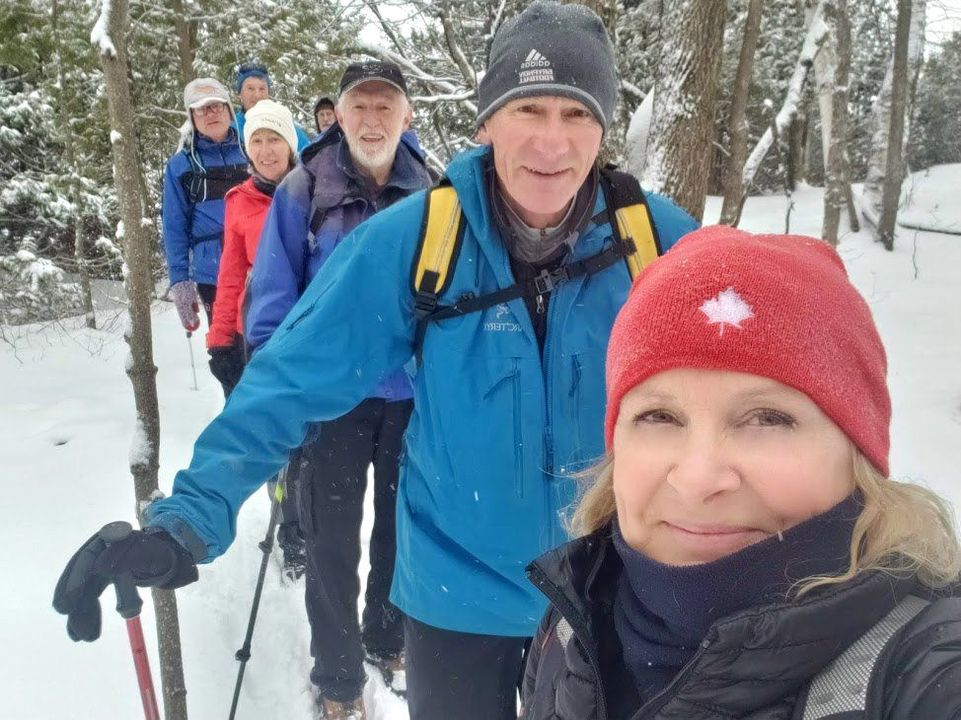
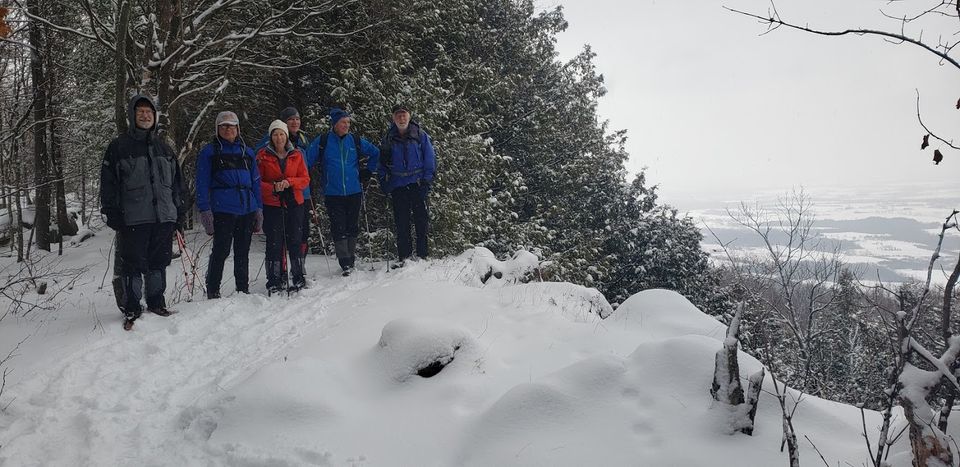
I led an Historical Hike with fellow members of the Blue Mountain Bruce Trail Club. A day in Our local History – December 7, 1649 marks the 370th Anniversary of when the Iroquois conducted a deadly raid against the Betan (Petun) Wolf clan village Etharita (St Jean), one of the nine Petun Villages located along the bottom ridge of the Blue Mountains, going from Craigleith to Duntroon. (To clarify, Petun is the anglicized name for the Betan, which is the name they called themselves.) They killed men, women and children, as well as the Jesuit Missionary, Father Charles Garnier. Another Jesuit missionary Noël Chabanel, who left two days before, escaped the massacre (3 days). The next day however, the Huron who accompanies him in canoe robs and kills him with his hatchet before throwing his body into the river. This is the history I spoke about on my hike as we stood on the top ridge over-looking the location of the Petun Village where the attack happened. Signing off “Hiking with the Viking” Map 23, Blue Mountains Bruce Trail Club

Nottawasaga Bluffs and the Amabel formation

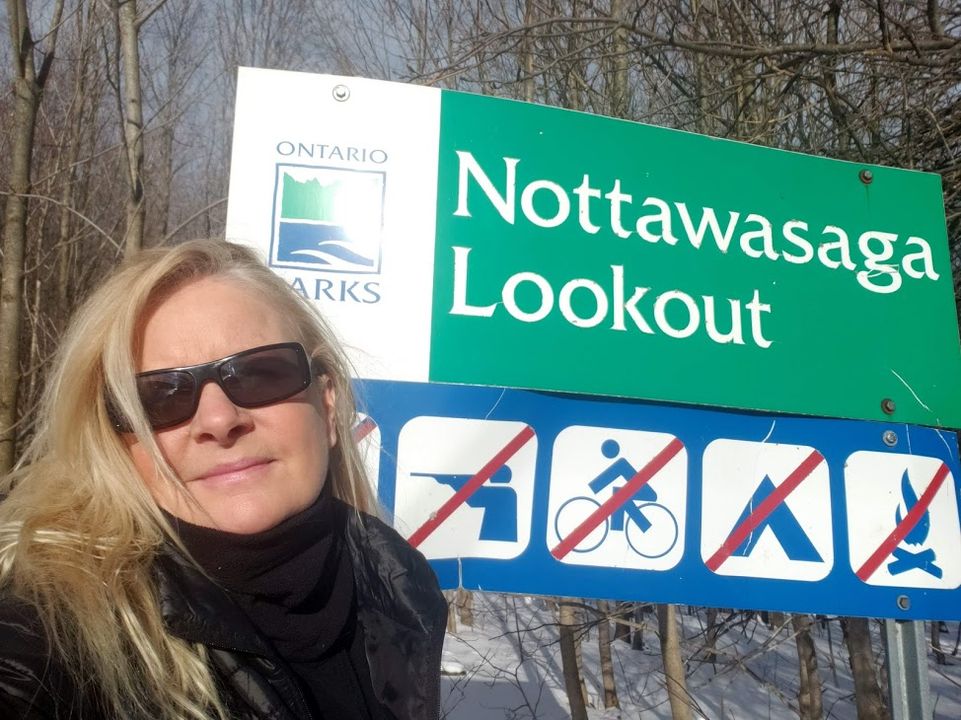
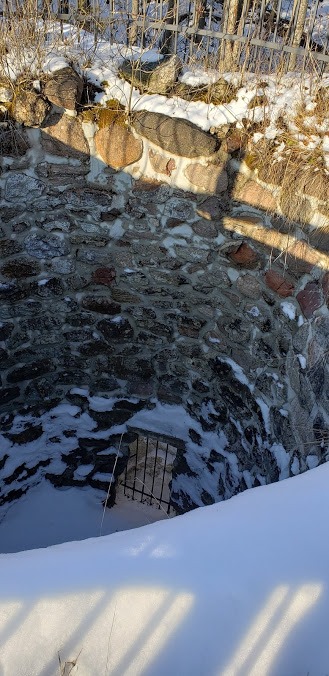
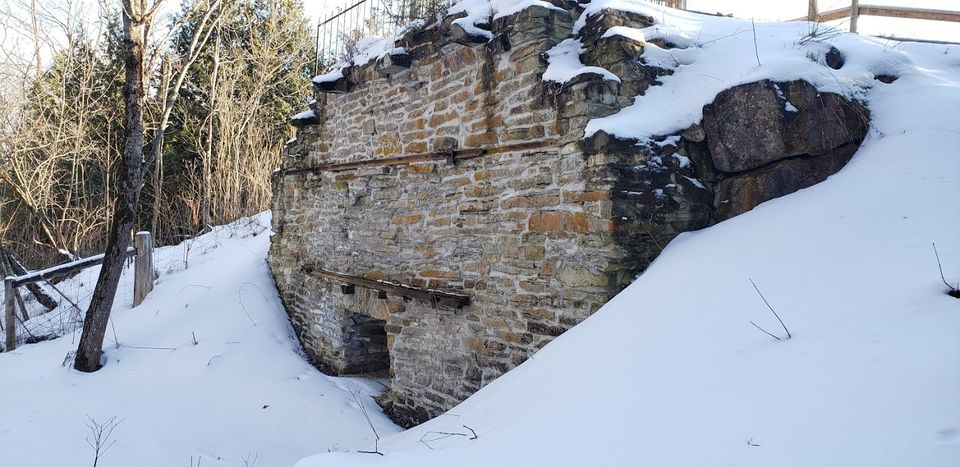
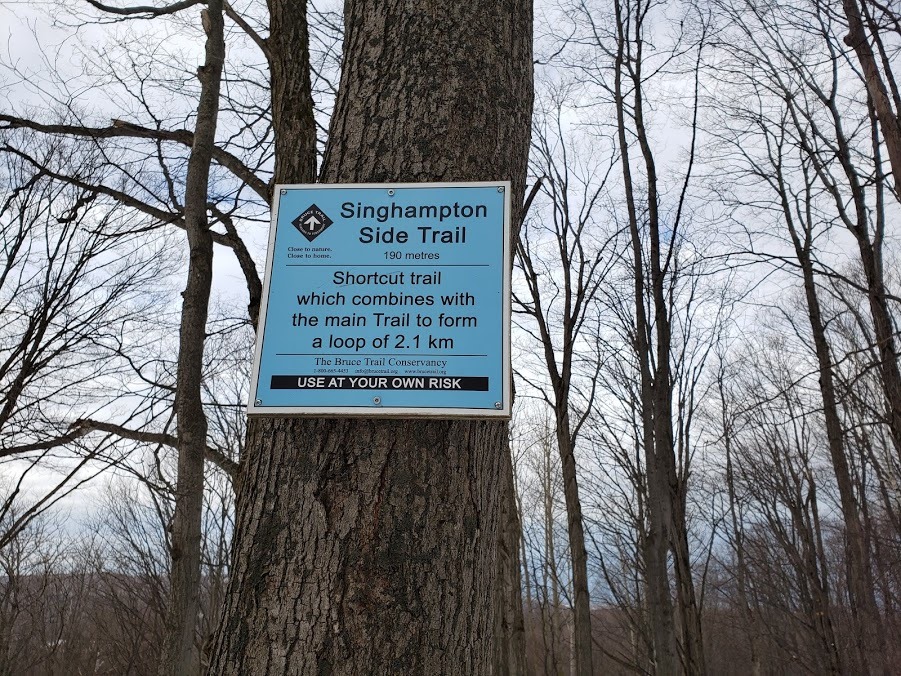
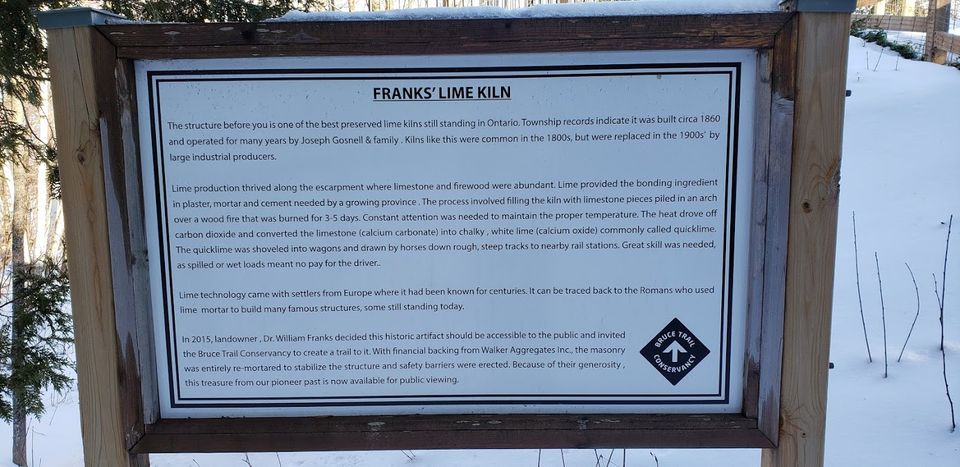
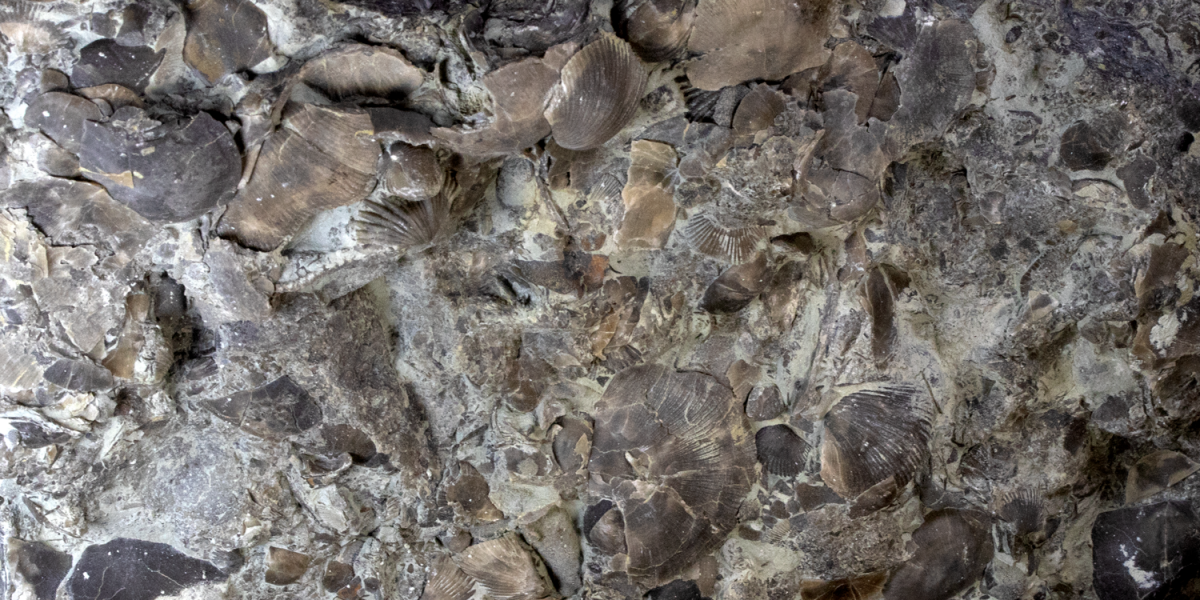
High on the Escarpment overlooking Nottawasaga Bay and Collingwood is a rocky oasis of trees, ferns and deep crevices that were created when huge blocks broke away from the cliff face. The Trail begins at the Nottawasaga Lookout and passes by ancient cedars that cling to the Escarpment face, zigzagging through the Pretty River Valley and Clearview Township. This beautiful rock is the Amabel Formation – dolomite and limestone created on the bottom of a 250 million-year-old warm water sea that once existed here. Along the way, you will see an incredible example of the ground we hike on by the old Walker quarry just up from Duntroon Village. It is quite spectacular to see. To finish this hike off is ‘Franks Lime Kiln’, which is one of the best-preserved lime kilns in Ontario, built in 1860 by our first settlers. Lime provided the bonding ingredient in plaster, mortar and cement. The process involved filling the kiln with limestone pieces piled in an arch over a wood fire that was burned for 3-5 days. This 10 km hike has every ingredient to make it an awesome historical experience! Signing off, “Hiking with the Viking”. Map 23, Blue Mountain Bruce Trail Club

Skinner’s Bluff & the Sea Cave

Today, I hiked a 19km loop at Skinners Bluff to Bruces Caves atop the Niagara Escarpment. It is so breathtaking, I can honestly let the pictures do the talking for me. Along the way, I stopped and enjoyed many spectacular lookouts over Colpoys Bay with the Escarpment ridge showing on the other side . Finished the hike off by exploring Bruce Caves, an ancient sea cave. These caves were formed by the wave action of post-glacial Lake Algonquin, 7,000 to 8,000 years ago. Wow!! Perfect day, even the bit of rain was awesome! Signing off “Hiking with the Viking”. Map 35 # Pennisula Bruce Trail Club

Remnants of long ago lives on in the magic of the forest .

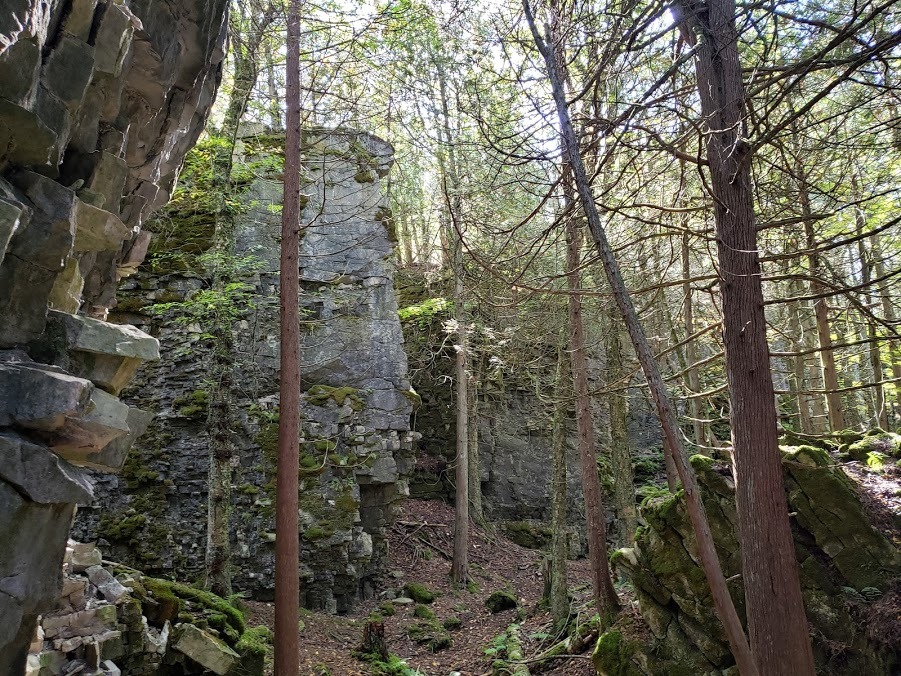
As I hike the path leading to the forest, there is a transformation that begins to take place. I can feel the earth’s warmth being released from the ground beneath, travelling up my body and relaxing my muscles. The grasshoppers on the path spread their wings and fly to the fields on either side, allowing my passage to the gateway of the forest within. The path soon changes into deep crevices and talus rock created thousands of years ago, when it existed as the underground of a warm water sea. I watch my footing knowing that one slip and I will fall into the underworld below to be lost forever in the darkness. It is here where the keeper of the forest greets me. A spirit in the tree guarding the antiquities left behind of those who once lived on this land. I nod my head in respect, giving credence to the deity before me. In return, it reveals to my eyes all the hidden beauty and I am lost in it’s magnificence, until I reach the stepping stones leading me back up to the world that I came from. Tomorrow, I will turn the page to my next adventure in the world of Nature. Signing off “Hiking with the Viking”. Map #25 Kolapore Beaver Valley Bruce Trail Club
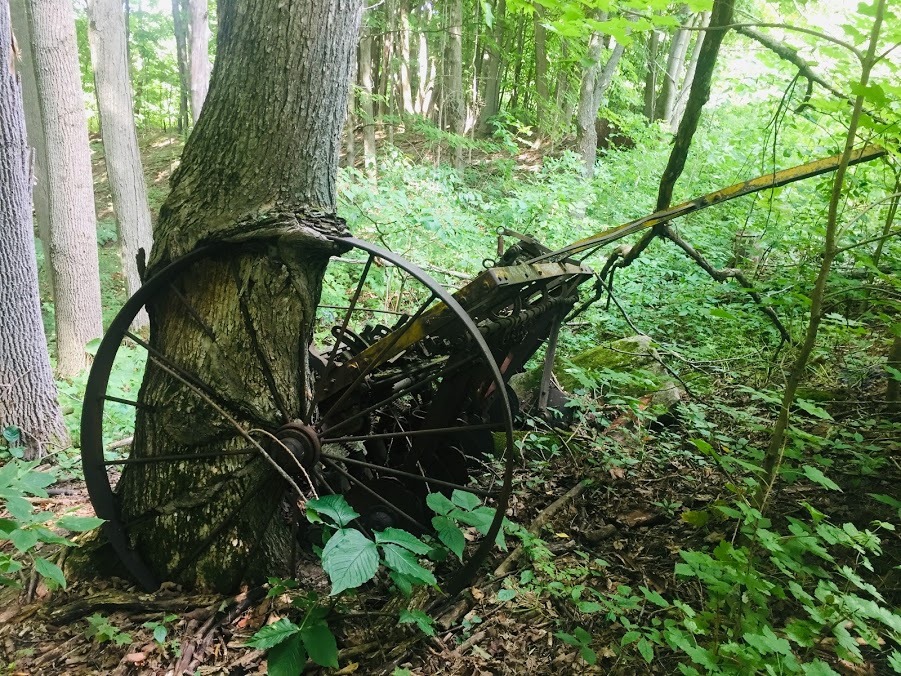
Boyd’s Crevices and the Horse skull

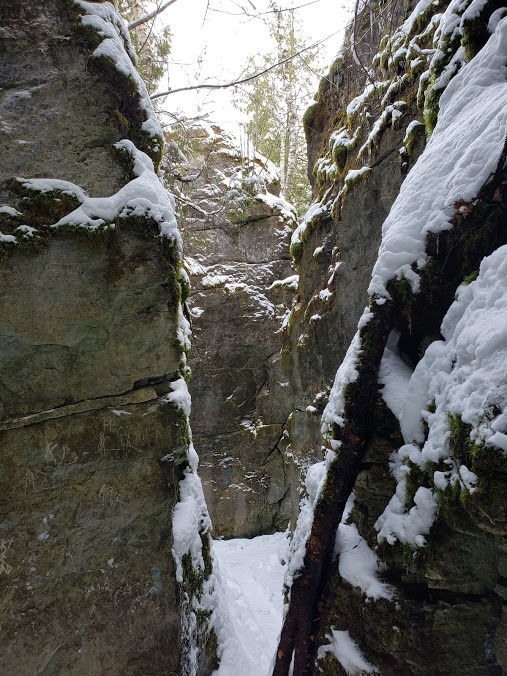
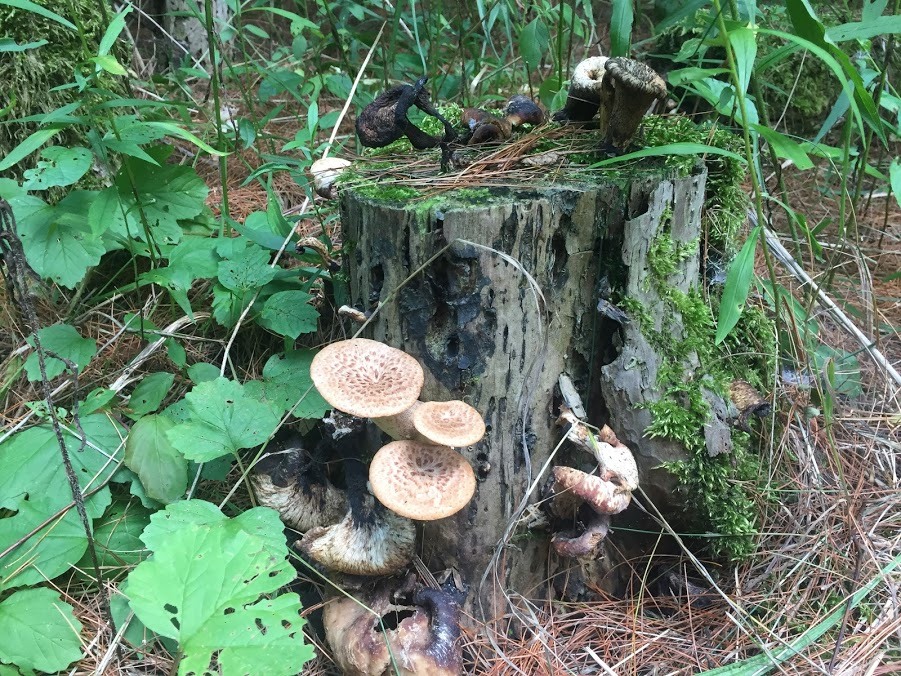
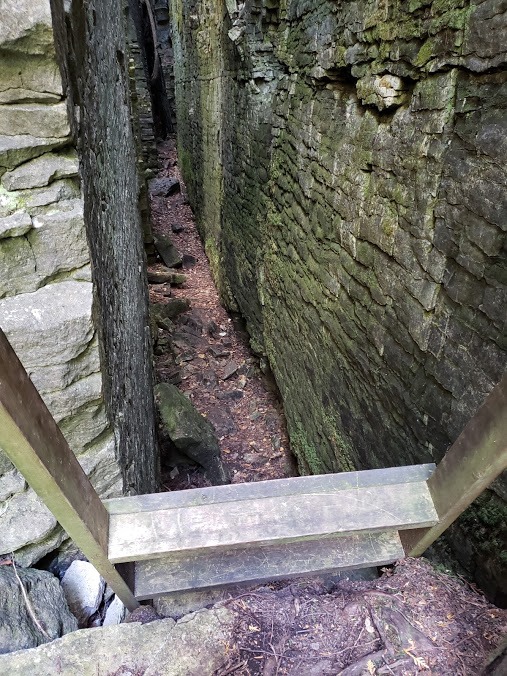
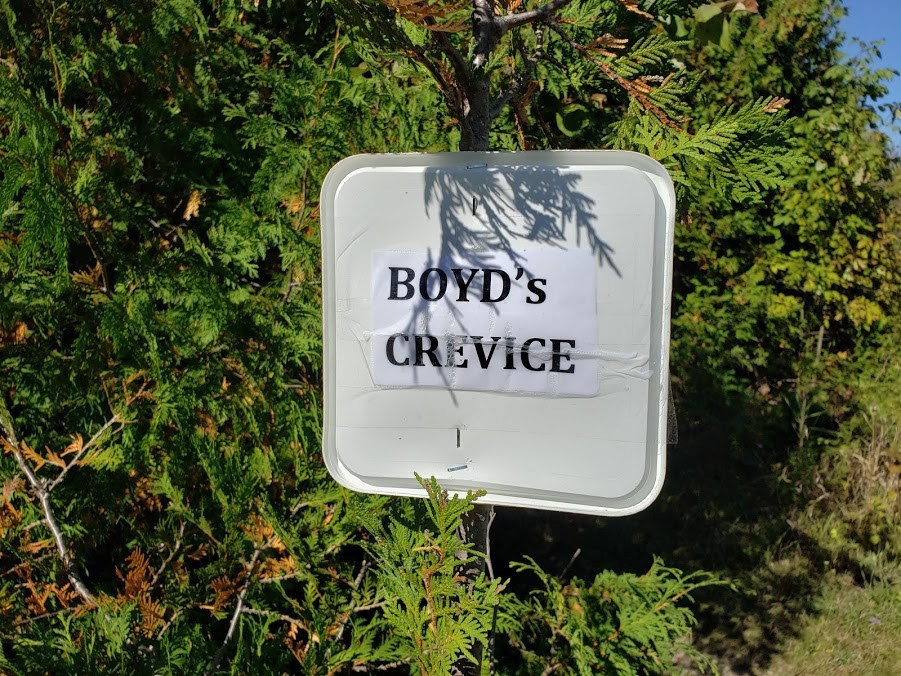
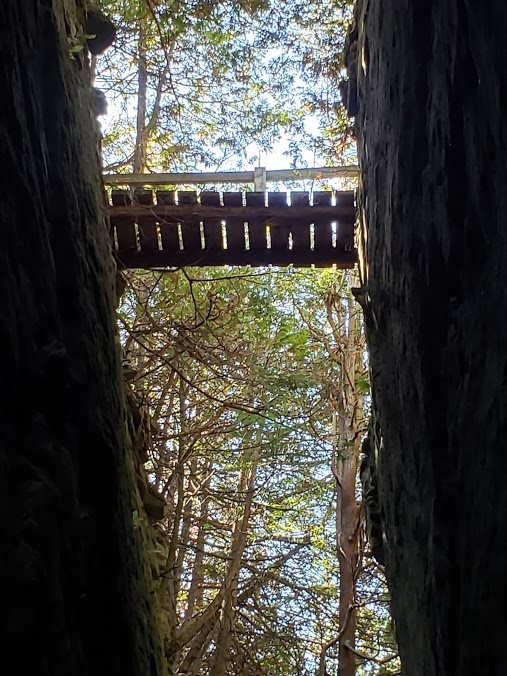
At the Boyd Crevices, the Bruce trail leads through a labyrinth of crevices and mini-canyons lined with sheer walls of limestone rock that define the many fissures. The crevices only get a little light, perhaps no direct sunlight at all, so they form a cooler-than-normal micro-climate. The walls are covered by mosses and ferns, and sometimes liverworts and if you look closely, you will see some mushrooms. At one point, I saw a wooden bridge over-head, connecting two rock walls. I decided to find the trail leading to it. I had to climb a wall and once on top, I found the trail. It went right along the edge of the towering rock walls, and was over-grown in places, so I opted out, for safety reasons, and never found the bridge. BUT, I did come across an amazing find. A horses skull, no other bones, that had been stripped clean of flesh. Obviously, a wolf dragged it out there. Fascinating, to say the least!! Thanks to my friend Jackie, for helping me to identify it while I was there! No horsing around for me! Signing off “Hiking with the Viking”. Oct/19

The two Scarpes of the Beaver Valley

Did you know that there are actually two different ‘Escarpment’ cliffs, depending on where you are in the Beaver valley? The one is obvious on Grey Rd 13, with Old Baldy and Eugenia Falls. The second one travels along Pioneer drive and passes the Beaver Valley Ski Club. I hiked 21 kms here, and I can tell you it is FANTASTIC and UNBELIEVABLY beautiful!! It is the remains of an ancient coral reef of the Michigan Basin when it was a tropical sea, this layer jumps out especially at high cliffs like these. It is exhausting though, as it up and down the Scarpe’s highest points, but so worth it. Get out there and experience this, even if it’s in a car. You won’t be disappointed!! Signing off, “Hiking with the Viking”

The Outlier and the Viking

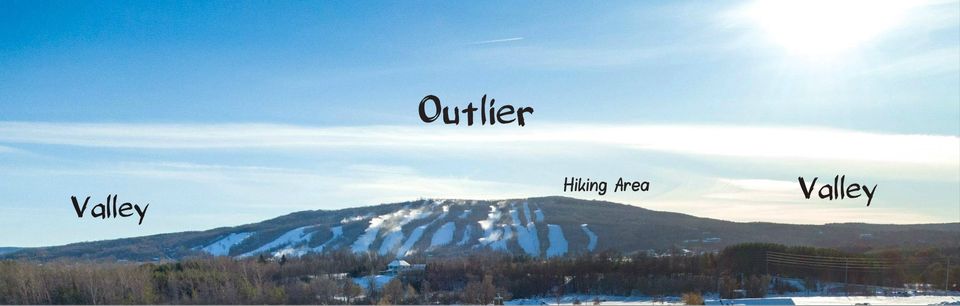
During the Ice Age, continental glaciers covered Southern Ontario on numerous occasions. Over a period of about a million years, major advances of glaciers alternated with long periods of mild climate during which the glaciers completely disappeared. When at it’s minimum, the glacial ice was about two km deep in the Blue Mountains area.The last glacier began retreating from this area about 10,000 years ago. As soon as the ice left, streams began to erode the land and valleys were carved into the glacial till. On either side of Osler Bluff are such Valleys, and it separated younger rock from the main older rock. The end result is a section of land, such as the Osler Bluff, which is called an Outlier. Some day, in the distant future, Osler will become an “island” separated from the main body of the Escarpment. Now THAT is cool stuff! No wonder I love to be on the Escarpment. At the end of my hike, I took part in the sunset from the shore of Georgian Bay. It doesn’t get better than that! Signing off, “Hiking with the Viking”!

The Pretty River and explorer Samuel Champlain

Today, I hiked the waterfall trail in the Pretty River Valley. It is named rightfully so. It is so peaceful and “Pretty” in here, but did you also know that famous explorer Samuel Champlain passed by here in 1616! In his journals, Champlain said that “travelling (here) is very troublesome in winter”. No kidding! Can you just imagine trying to travel along the bottom of the Escarpment, from what is now Duntroon, to Craigleith on just Indian paths. It was once called “Father Noel Chabanel’s road, and on December 7, 1616, the trails were described as “roads difficult of passage; and at a most fatiguing season, as the snow had already covered the ground”.. This great traveler thought that he may have found the route to China, but alas, he only discovered a snow filled pretty valley, so headed back to his ship docked at Carhagouha, which is now called “La Fountaine! I love our area history! Signing off “Hiking with the Viking” . November 2019

Petun to pioneers – Nottawasaga Township

I hiked to the Petun Conservation Area up the Escarpment in the Pretty River Valley. I did a 10 km and was pretty sore and tired by the end of it. But that’s what Vikings do – they wait for perfect conditions and then push themselves to the top – this time the top being the Petun Conservation Area, which looks out over the spectacular view of Clearview Township. Clearview was established on January 1, 1994, when the Townships of Nottawasaga and Sunnidale were amalgamated and it is stunning from up here. Soon after the survey of the Township of Nottawasaga by Thomas Kelly, in 1832, and Chas. Rankin in 1833, a few settlers began to arrive from Scotland, Ireland and Germany for free 5 acre lots granted in exchange for clearing for the Government. They were paid in provisions, which at first they had to carry from Barrie on their backs. Imagine carrying their supplies on small trails through the swamp and wild forest for 50 km one way!! Looking out from this point, I can visualize how far it actually is! Peter Currie came with the first influx of Islay settlers in the fall of 1834, but did not live long to see the growth of the settlement, having been killed by a falling tree in March, 1835, north of Duntroon. His death was the first that took place in the new settlement. Next time you go to Currie’s market on 6th street, mention that you heard this story about their ancestor from the Viking!! signing off, “Hiking with the Viking”

The Niagara Escarpment has the oldest forest ecosystems
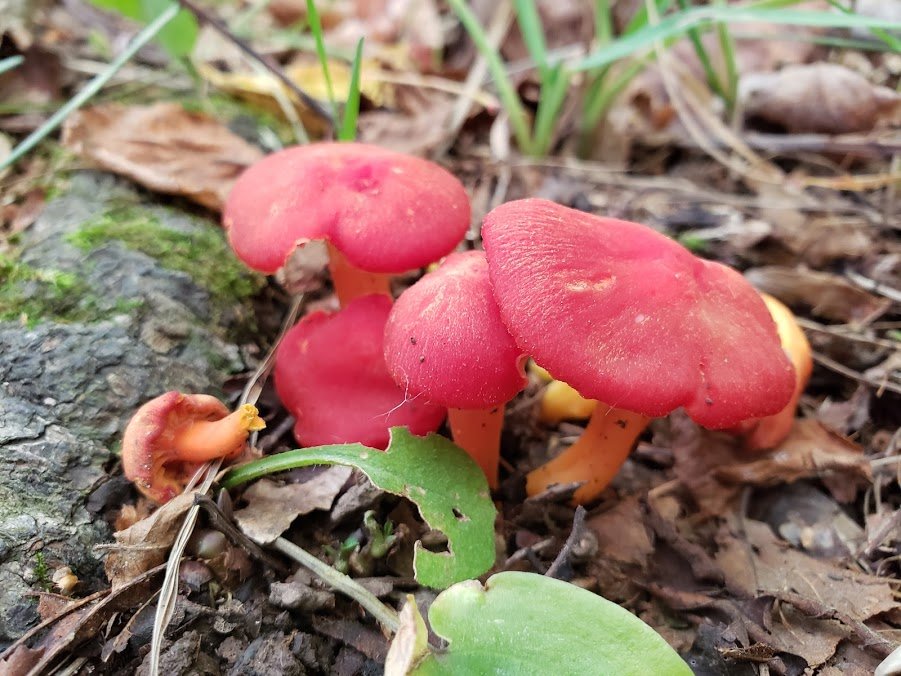
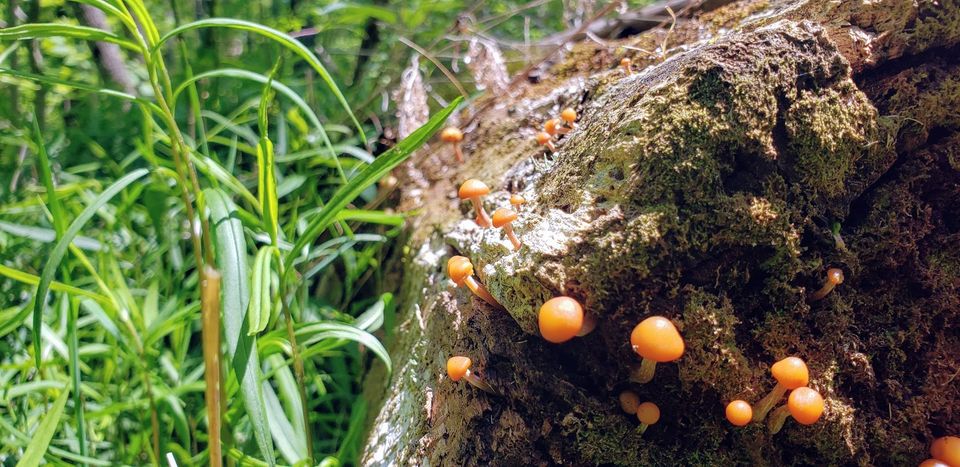
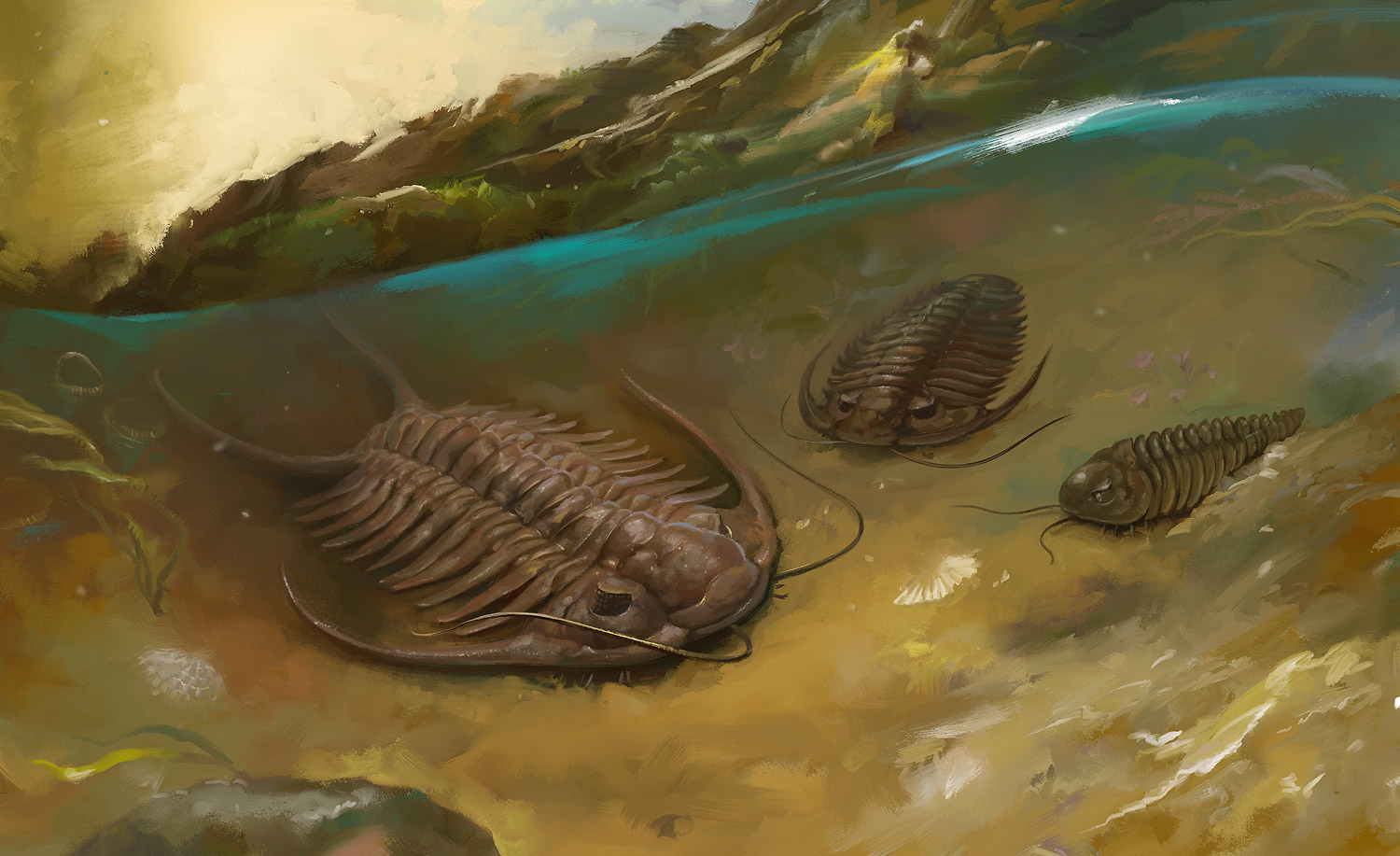
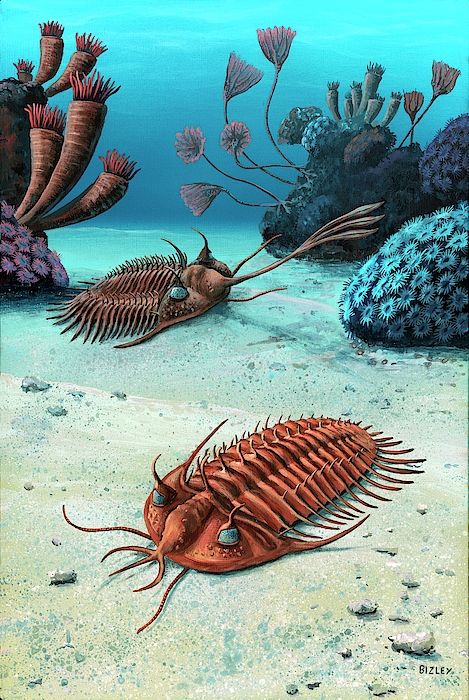
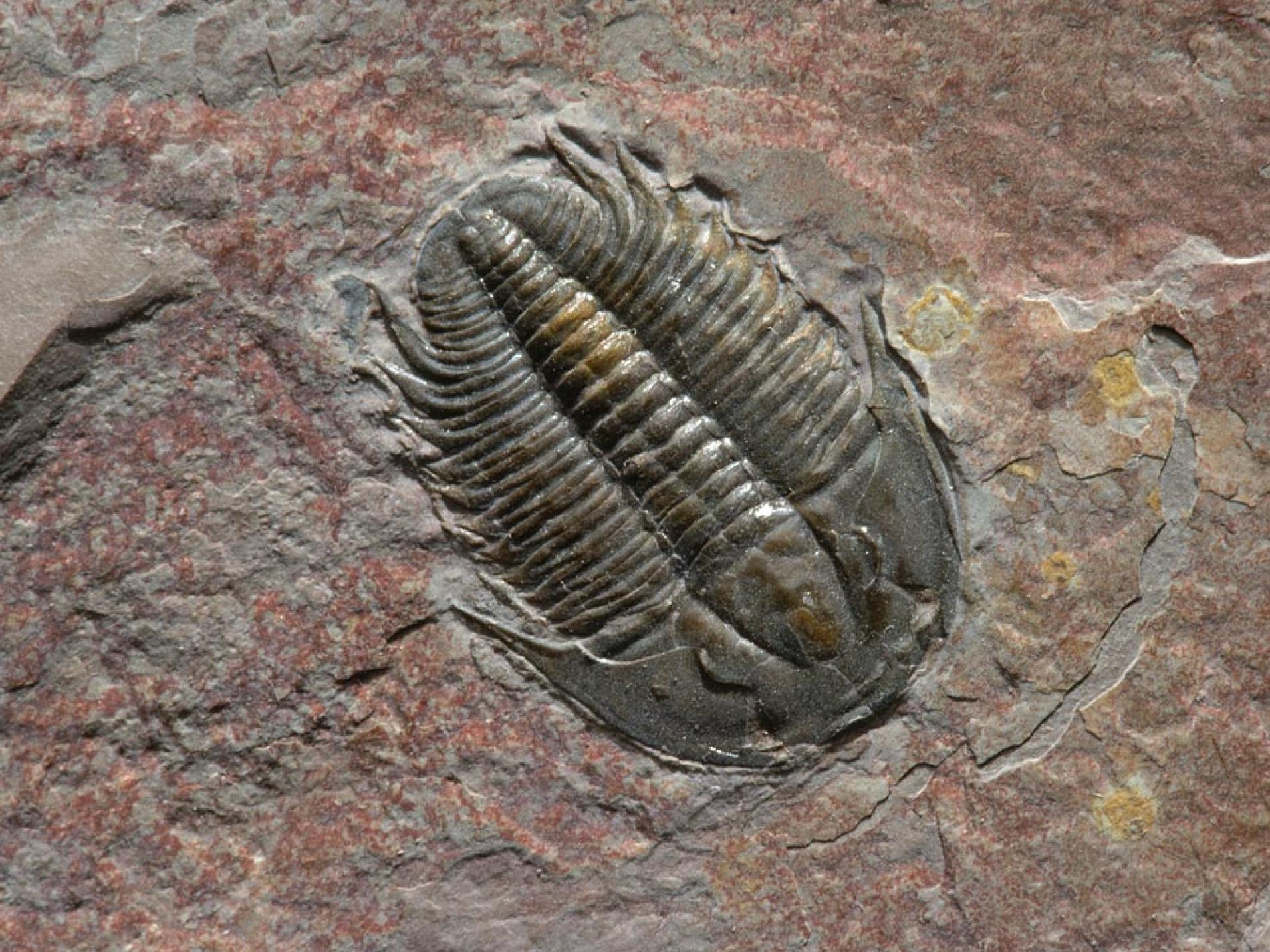
During the late Ordovician Period,approximately 450 million years ago, a large, shallow warm water sea filled this area. The climate was tropical, and although the shallow sea was teaming with life, plants and animals had not yet been established on land. It was the time of the first arthropods, such as the trilobites, who’s fossils can be found in our shale shoreline in Craigleith. In the fall especially, I find mushrooms and microlife in the forest that look like shells, jelly fish and other sea life, but it’s fungi on the ground. It’s so incredible, I sometimes have to drag myself away, or I would still be looking at them under the moonlight…I will leave that for another night! 
The Viking & The Goldilocks Zone

As the sun sets in Beaver Valley, it is neither too hot nor too cold, but rather just right, as it is in the Goldilocks Zone. I am always amazed at the way the sun and earth work together to refract the rays of light into a magical canvas of art! Late this afternoon, I hiked in this place where the forest and the Valley were getting ready for it’s slumber. It is so beautiful, it simply cannot be described by words alone…it’s a feeling, an acknowledgement of respect that goes far beyond the surface upon which we walk. It is home, it is balance and peace, it is where I belong…signing off “Hiking with the Viking” November 23, 2019